
Yes — modern cold-climate heat pumps work exceptionally well in BC winters. With average winter temperatures in Greater Vancouver hovering between 0°C and 7°C, the Lower Mainland sits in one of the most ideal climates in all of Canada for heat pump performance. Vancouver has an oceanic climate, and the west coast is the only part of Canada where the average temperature stays above freezing even in winter — making Vancouver the only major Canadian city without a freezing winter.1 Today’s cold-climate heat pumps maintain efficient heating output well below –25°C, so your BC home stays warm — even during the occasional Arctic outflow.
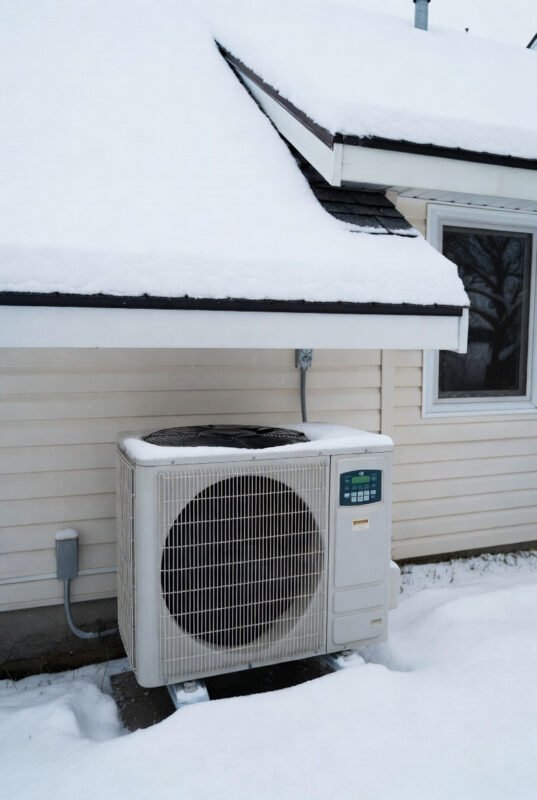
At Blue Ridge Heating & Cooling, we’ve installed hundreds of heat pump systems across Surrey, Burnaby, Vancouver, Langley, and the rest of the Lower Mainland. With 15+ years of experience and Red Seal-certified technicians, we see the real-world performance data every winter — and we can tell you: heat pumps aren’t just “good enough” for BC. They’re the best heating option available.
Table of Contents
- How Heat Pumps Extract Heat From Cold Air
- What Temperature Is Too Cold for a Heat Pump?
- COP Efficiency Table: Performance at Every Temperature
- Why Vancouver & Surrey Are Ideal for Heat Pumps
- Best Cold-Climate Heat Pump Models for BC (2026)
- Real-World Performance: What We See on Our Installations
- Dual-Fuel & Hybrid Systems: When You Want a Backup
- When a Heat Pump Isn’t Enough (Rare BC Scenarios)
- 5 Heat Pump Myths Busted
- BC Rebates & Incentives for Cold-Climate Heat Pumps
- FAQ
How Heat Pumps Extract Heat From Cold Air {#how-heat-pumps-extract-heat}
One of the most common questions we hear from Surrey and Vancouver homeowners is: “How can a heat pump pull heat from cold air?”
The science is straightforward. Even air at –25°C contains thermal energy. A heat pump uses a refrigerant cycle to absorb that thermal energy from outside air, compress it to a higher temperature, and release it inside your home. Today’s cold-climate heat pumps use advanced variable-speed compressor technology that adjusts output based on conditions, unlike older systems that simply turned on or off. These systems extract heat from outdoor air — even frigid air contains usable heat energy — and can modulate their performance smoothly across extreme temperature ranges.2
The key technologies that make this possible in 2026:
- Variable-speed inverter compressors — Variable-speed (inverter) compressors adjust capacity to match load, maintaining higher efficiency and reducing short-cycling compared with fixed-speed compressors.3
- Enhanced vapour injection (EVI) — Vapour injection technology provides a performance boost when outdoor temperatures drop — like a turbo system for your heat pump.2
- Advanced defrost controls — Advanced controls minimise defrost frequency and duration, lowering efficiency penalties and improving comfort during low-temperature operation.3
- Next-generation refrigerants — R-32 and R-410A formulations optimised for sub-zero heat extraction.
If you’re curious about how different system types deliver this heat, our guide on ductless vs. ducted heat pumps breaks down the differences.
What Temperature Is Too Cold for a Heat Pump? {#what-temperature-too-cold}
Short answer: For a modern cold-climate heat pump, there’s functionally no temperature in BC that’s “too cold.”
Cold-climate models from Mitsubishi, Daikin, and Bosch are rated to operate down to –13°F (–25°C).4 Daikin’s Aurora series can maintain 100% heating capacity down to –20°C ambient temperature. All single-zone Daikin systems can operate down to –32°C before shutting down.5
Now consider that Surrey’s winter temperatures see highs fluctuating from 7.3°C (45.1°F) to 4.1°C (39.4°F) and lows from 3.6°C (38.5°F) to a chilling 0.8°C (33.4°F).6 Even during a rare Arctic outflow event, the coldest temperature ever recorded in Vancouver was –18.3°C (–0.9°F) on December 29, 1968.7
That means even a once-in-a-generation cold snap in Greater Vancouver is still within the rated operating range of today’s cold-climate heat pumps. For the vast majority of BC winter days, your heat pump is running at peak efficiency — far above its rated minimums.
📞 Wondering which system is right for your home? Call Blue Ridge at (604) 615-2212 for a free in-home estimate — we’ll evaluate your home’s heat load and recommend the perfect system. Or request a quote online.
COP Efficiency Table: Heat Pump Performance at Every Temperature {#cop-efficiency-table}
COP (Coefficient of Performance) is the key metric that tells you how efficiently a heat pump is working. COP is a ratio that compares the amount of heat energy delivered to the energy consumed. For example, a COP of 3 means the heat pump moves three units of heat for every unit of electricity it uses. A higher COP signals greater efficiency and lower operating costs.8
Here’s what you can expect from a quality cold-climate heat pump at various outdoor temperatures:
| Outdoor Temperature | COP (Cold-Climate Model) | What This Means | Relevance to BC |
|---|---|---|---|
| 10°C (50°F) | 3.5 – 4.5 | Maximum efficiency — 350-450% efficient | Typical BC spring/autumn day |
| 5°C (41°F) | 3.0 – 4.0 | Excellent efficiency | Average Vancouver winter day |
| 0°C (32°F) | 2.5 – 3.5 | Very good efficiency | Typical Surrey cold night |
| –5°C (23°F) | 2.2 – 3.0 | Good efficiency — still 2-3× better than electric baseboard | Cold BC night |
| –10°C (14°F) | 1.8 – 2.5 | Solid efficiency | Arctic outflow event |
| –15°C (5°F) | 1.5 – 2.2 | Reduced but still effective | Extreme BC cold snap |
| –25°C (–13°F) | 1.2 – 1.8 | Minimum operation — backup may assist | Once-in-a-decade event in Metro Van |
Sources: ENERGY STAR CCHP specifications, DOE Cold Climate Heat Pump Challenge data, manufacturer rated performance.
ENERGY STAR requires a minimum COP of 1.75 at 5°F (–15°C) and retention of 70% heating capacity at 5°F compared to 47°F for certified cold-climate heat pumps.9
The critical takeaway: Even at –13°F (–25°C) with a COP of just 1.5, a heat pump is still 50% more efficient than electric resistance heat.4 On a typical Surrey winter day at 3–5°C, your cold-climate heat pump is producing 3 to 4 units of heat for every unit of electricity consumed — that’s why our clients see dramatic drops in heating bills.
For a deeper look at what a heat pump installation costs and how quickly it pays itself back, check our full guide.
Why Vancouver & Surrey Are Ideal for Heat Pumps {#vancouver-surrey-ideal}
BC’s Lower Mainland is genuinely one of the best places in North America to install a heat pump. Here’s why:
Mild Winter Temperatures
As per the Köppen-Geiger classification, Surrey’s climate is categorized under Cfb (oceanic / marine west coast). The average annual temperature is approximately 9.8°C (49.7°F).10 December is the coldest month, with a mean temperature of 2.3°C (36.1°F) — the coldest monthly average throughout the entire year.10
Compare that to cities like Toronto (January average: –6°C), Edmonton (–14°C), or Winnipeg (–19°C). In the Lower Mainland, your heat pump spends the entire winter in its highest-efficiency operating range.
The Numbers That Matter for Your Energy Bills
| Factor | Greater Vancouver / Surrey | Canadian Average |
|---|---|---|
| Average January Low | 0.8°C – 1.3°C | –15°C to –20°C |
| Days Below –10°C per Year | ~2 days | 50-120 days |
| Days Below 0°C (all day) | ~3-4 days | 80-150 days |
| Heat Pump COP on Average Winter Day | 3.0 – 4.0 | 1.8 – 2.5 |
| Heating Season Duration | ~5 months | 7-8 months |
Vancouver’s chilliest winter nights have lows below –10°C. The city averages just two nights a year, from November to February, when the thermometer drops that low. Temperatures down to –20°C (–4°F) are not normal here.11
This means that for approximately 98% of winter hours, your heat pump is operating at COP 2.5 or higher. That’s why homeowners across our HVAC service area in Surrey are switching from gas furnaces to heat pumps at record rates.
Year-Round Usefulness
Unlike furnace-only homes, a heat pump provides both heating and cooling. With Metro Vancouver summers trending warmer (the 2021 heat dome is still fresh in many memories), having air conditioning capability built into your heating system provides invaluable peace of mind. Check our heat pump vs. furnace in BC comparison for the full breakdown.
Best Cold-Climate Heat Pump Models for BC (2026) {#best-cold-climate-models}
Not all heat pumps are created equal. Based on our experience installing systems across the Lower Mainland, here are the top cold-climate heat pump brands we recommend in 2026:
1. Mitsubishi Electric Hyper-Heat (H2i®)
With over 30 years of experience in variable-speed heat pump technology and a proven track record in harsh winter climates, Mitsubishi has established itself as the benchmark. Mitsubishi’s secret weapon is its Hyper-Heating INVERTER® (H2i®) technology.12
- Minimum operating temperature: –25°C (–13°F) — continues operating below –28°C
- The Hyper-Heat delivers supply air at 100–120°F (38–49°C) even when it is 5°F (–15°C) outside.4
- NEEP testing shows the MUZ-FH24NA producing 27,400 BTU/h at 5°F with a COP of 2.4, and still producing 18,000 BTU/h at –13°F.4
- Available in ductless mini-split and ducted configurations
- 12-year compressor warranty (through authorized contractors)
Our take: The gold standard for BC cold-climate installations. We install Mitsubishi Hyper-Heat in homes across Surrey, Burnaby, and Coquitlam with excellent results.
2. Daikin Aurora Series
The Daikin Aurora Series is specifically engineered to deliver exceptional performance even when temperatures drop significantly, offering an HSPF rating of 12.5.5
- Can maintain 100% heating capacity down to –20°C ambient temperature.5
- Multi-zone and single-zone options available
- Excellent SEER2 ratings for summer cooling
- 12-year parts warranty
Our take: Exceptional performance-per-dollar. The Aurora is a particularly strong choice for larger BC homes that need multi-zone control.
3. Bosch IDS Ultra
- Minimum operating temperature: –25°C (–13°F)
- Strong COP retention at low temperatures
- ENERGY STAR Cold-Climate certified
- Compatible with existing ductwork for easy retrofit
Our take: An excellent mid-range option with solid cold-weather performance. Great for BC homeowners replacing an existing gas furnace who want to use their current ductwork.
4. Carrier / Bryant Greenspeed
- Variable-speed inverter compressor
- Quiet outdoor unit operation
- Good HSPF2 ratings
- Competitive pricing
5. Fujitsu Halcyon XLTH
- Rated to –26°C (–15°F)
- Strong ductless mini-split lineup
- Good value proposition
For a detailed brand-by-brand comparison with pricing, visit our best heat pump brands in BC (2026) guide.
Real-World Performance: What We See on Our Installations {#real-world-performance}
Lab specifications are one thing. What actually happens in BC homes during January is what matters. Here’s what we’ve consistently observed across our installations in the Greater Vancouver area:
Surrey – 2,200 sq ft Home (Mitsubishi Hyper-Heat Ducted System)
- Old system: 15-year-old natural gas furnace (80% AFUE)
- New system: Mitsubishi PUZ-HA36NHA5 ducted heat pump
- January electricity increase: ~$85/month
- Gas bill eliminated: ~$175/month
- Net monthly savings: ~$90 during heating season
- Performance: Heat pump ran as sole heat source through entire winter including the cold snap that dipped to –8°C. No backup heat was needed.
Burnaby – 1,400 sq ft Townhome (Daikin Aurora Ductless Multi-Zone)
- Old system: Electric baseboard heaters
- New system: 3-zone ductless heat pump
- Winter electricity savings: ~40% reduction in heating portion of bill
- Comfort improvement: Consistent temperatures in all rooms; no more cold spots near windows
Langley – 3,000 sq ft Home (Dual-Fuel Hybrid)
- Old system: Natural gas furnace
- New system: Ducted heat pump + existing furnace as backup
- Gas usage reduction: ~75% (furnace only kicks in below –5°C)
- Annual savings: ~$800
These results align with broader data: Households that switch from fossil fuels to electric heat pumps for space heating can see energy savings of as much as 80%.13
📞 Want results like these? Call (604) 615-2212 for a free in-home estimate. We provide transparent, upfront pricing — no surprises. We also handle 100% of your rebate paperwork.
Dual-Fuel & Hybrid Systems: When You Want a Backup {#dual-fuel-hybrid}
A dual-fuel (or hybrid) system pairs a heat pump with your existing gas furnace. The heat pump handles heating when it’s most efficient (which in BC is nearly all winter), and the furnace kicks in only during extreme cold snaps.
Hybrid controls switch to the most efficient mode depending on outdoor temperature and real-time economics. The best practice is to configure controls to use the heat pump throughout its efficient range and switch to backup heat only when the heat pump COP falls below the backup system’s efficiency equivalent.3
How It Works in BC
| Outdoor Temperature | System Used | Why |
|---|---|---|
| Above –5°C | Heat pump only | COP 2.5+ = more efficient and cheaper than gas |
| –5°C to –15°C | Heat pump only (cold-climate model) | COP still 1.8–2.5; still beats gas on operating cost |
| Below –15°C | Gas furnace kicks in | Rare in Lower Mainland — maybe 1-3 hours/year |
In practice, most of our dual-fuel clients in Metro Vancouver find their gas furnace runs less than 10 hours per entire winter. Some winters it doesn’t run at all.
A dual-fuel setup is popular among homeowners who:
- Have a relatively new gas furnace they don’t want to waste
- Want the psychological comfort of a gas backup
- Have a home with existing ductwork
You may keep a fossil fuel backup (like a gas furnace) in a dual-fuel configuration. However, the heat pump must still serve as the primary source for the 80% coverage area14 to qualify for certain CleanBC rebates.
Learn more about the economics in our heat pump vs. furnace in BC article.
When a Heat Pump Isn’t Enough (Rare BC Scenarios) {#when-not-enough}
We believe in honest advice — even when it means telling a homeowner that a heat pump alone might not be the perfect solution. Here are the rare situations in BC where supplemental heating may be recommended:
1. Poorly Insulated Heritage Homes
Older homes with minimal insulation, single-pane windows, and significant air leakage have very high heat-loss rates. Heat pumps deliver air at lower temperatures than furnaces (around 95–100°F versus 120–140°F), making air leaks more noticeable. This is why professional energy audits are crucial before installation.2 We often recommend insulation upgrades alongside the heat pump for maximum comfort and efficiency.
2. Homes in Mountain-Adjacent Areas
Properties at higher elevations in areas like the upper North Shore, parts of Maple Ridge near Golden Ears, or the eastern Fraser Valley (Chilliwack/Abbotsford) experience colder temperatures than coastal Surrey or Vancouver. While cold-climate heat pumps still work well, a dual-fuel backup may be warranted.
3. Undersized or Improperly Installed Systems
Oversizing can cause short cycling and reduced seasonal efficiency; undersizing causes frequent reliance on backup heat.3 This is the #1 reason heat pumps “don’t work in the cold” — it’s almost never the technology; it’s incorrect sizing. Proper Manual J heat-load calculations are non-negotiable.
This is exactly why choosing the right installer matters. Blue Ridge Heating & Cooling performs detailed heat-load calculations on every installation. We’re Red Seal Certified, BC Safety Authority Registered, and members of the Home Performance Contractor Network (HPCN). Learn about our full heat pump installation process.
5 Heat Pump Cold-Weather Myths — Busted {#myths-busted}
❌ Myth #1: “Heat pumps stop working below 0°C.”
Busted. The idea that heat pumps don’t work when it’s freezing outside is outdated. Modern cold-climate heat pumps use advanced technology to heat your home efficiently, even in extremely cold temperatures.2 Mitsubishi Hyper-Heating systems are engineered to deliver reliable heat even when outdoor temperatures hit –13°F — and they continue operating below –18°F.15
❌ Myth #2: “Heat pumps blow cold air in winter.”
Busted. Standard-efficiency heat pumps may deliver lukewarm air at low temperatures, but cold-climate models like the Mitsubishi Hyper-Heat deliver supply air at 38–49°C (100–120°F) even when it’s –15°C outside. That’s warm air you’ll feel at the register.
❌ Myth #3: “You still need a furnace as backup in BC.”
Busted for most Lower Mainland homes. With proper sizing and a cold-climate rated unit, the vast majority of homes in Surrey, Vancouver, Burnaby, and Langley can rely on a heat pump as their sole heat source. Research shows properly installed cold-climate heat pumps can handle 100% of a home’s heating needs even in regions where temperatures regularly drop below freezing.2
❌ Myth #4: “Heat pumps cost more to run than gas furnaces.”
Busted. When a heat pump operates at COP 3.0 (typical for a BC winter day), it produces the same amount of heat as a gas furnace while consuming roughly one-third of the energy cost in equivalent electricity. With BC’s relatively low hydro rates and rising gas prices, heat pumps are consistently cheaper to operate.
❌ Myth #5: “Heat pumps are just for mild climates.”
Busted. The Department of Energy’s Cold Climate Heat Pump Challenge tested systems at 23 sites across 10 U.S. states and 2 Canadian provinces, with units successfully operating at temperatures as low as –15°F (–26°C) while meeting efficiency requirements.2 If they work in Vermont and Northern Ontario, they certainly work in Surrey.
BC Rebates & Incentives for Cold-Climate Heat Pumps (2026) {#rebates}
The financial incentives for switching to a heat pump in BC have never been stronger:
With $50 million in each of the next two fiscal years — 2025-26 and 2026-27 — the Province plans to deliver as many as 8,300 new heat pump rebates to British Columbians.16
Current Program Highlights
- CleanBC Energy Savings Program (Income-Qualified): For a family of four making less than $87,350 annually, rebate amounts for a heat pump have been increased to $16,000, up from $9,500.13
- BC Hydro Home Renovation Rebate: Up to $4,000 in rebates for replacing your current electric heating system with a heat pump.17
- Municipal top-ups: Some Lower Mainland municipalities offer additional rebates on top of provincial programs.
Important Eligibility Requirements
- The BC government requires all rebate-eligible heat pumps to be installed by a member of the Home Performance Contractor Network (HPCN). If you hire a contractor who is not registered with the HPCN, you will be ineligible for any provincial rebates.14
- You must pre-register and receive an Eligibility Code before you begin any work or pay for equipment. Applying for a code after the heat pump is already installed leads to automatic disqualification.14
Blue Ridge Heating & Cooling is a registered HPCN member, BC Hydro registered, and CleanBC registered. We handle 100% of your rebate paperwork so you don’t leave money on the table. For a full cost breakdown, see our heat pump cost guide for BC (2026).
Frequently Asked Questions {#faq}
1. Do heat pumps work in BC winters?
Absolutely. BC’s Lower Mainland has one of the mildest winter climates in Canada. The west coast is the only part of Canada where the average temperature remains above freezing even in winter.1 Modern cold-climate heat pumps operate efficiently across BC’s entire winter temperature range, making them the ideal heating choice for homes in Surrey, Vancouver, Burnaby, and the rest of the Lower Mainland.
2. What temperature is too cold for a heat pump?
For modern cold-climate models, there’s no temperature in Greater Vancouver that’s too cold. Systems like the Mitsubishi Hyper-Heat and Daikin Aurora are rated to operate down to –25°C to –32°C. Vancouver’s all-time coldest recorded temperature was –18.3°C7 — well within the operating range of these systems.
3. How efficient is a heat pump at 0°C?
At 0°C, a quality cold-climate heat pump typically achieves a COP of 2.5 to 3.5. This means it produces 2.5 to 3.5 units of heat for every 1 unit of electricity consumed — making it roughly 250–350% efficient. Even standard electric baseboard heaters only achieve 100% efficiency (COP of 1.0).
4. Do I need a backup furnace with a heat pump in Surrey?
For most homes in Surrey and the Lower Mainland, a properly sized cold-climate heat pump can serve as your sole heating source. A dual-fuel (hybrid) setup with a gas furnace backup is an option for homeowners who want additional peace of mind, but it’s not a necessity in our climate. Learn more in our heat pump vs. furnace comparison.
5. How much can I save by switching from gas to a heat pump?
Most of our clients in the Greater Vancouver area save $50–$150 per month on heating costs compared to an older gas furnace. Households that switch from fossil fuels to electric heat pumps for space heating can see energy savings of as much as 80%.13 Exact savings depend on your home’s size, insulation, and current heating system.
6. What rebates are available for heat pumps in BC in 2026?
BC offers some of the most generous heat pump rebates in Canada. The CleanBC Better Homes and BC Hydro programs provide rebates up to $16,000 for heat pumps, depending on household income.18 Blue Ridge handles all rebate paperwork — contact us for a free estimate and rebate eligibility check.
7. What’s the best heat pump brand for cold weather in BC?
Based on our 15+ years of installation experience, Mitsubishi Hyper-Heat, Daikin Aurora, and Bosch IDS Ultra are the top-performing cold-climate heat pump brands for BC homes. Each has different strengths depending on your home’s layout and whether you need ductless or ducted installation. See our full best heat pump brands in BC guide.
8. Does a heat pump work during a power outage?
No — heat pumps require electricity to operate, just like a gas furnace requires electricity for its blower and controls. If power outages are a concern, consider a backup generator or battery storage system.
9. How long does a heat pump last in BC?
A quality heat pump, properly installed and maintained, typically lasts 15–20 years in BC’s climate. Regular maintenance is key to longevity — our heat pump repair & maintenance plans help keep your system running at peak performance.
10. Is a ductless or ducted heat pump better for cold weather?
Both types deliver identical cold-weather performance from the same outdoor unit technology. The choice depends on your home’s layout: ducted systems use existing ductwork, while ductless mini-splits are ideal for homes without ductwork or for zone-specific heating. Mini-splits are especially popular in cold climates because they’re typically more efficient than ducted systems and offer flexible installation options.19 Read our detailed ductless vs. ducted comparison.
Ready to Stay Warm All Winter? Let’s Talk.
If you’re a homeowner in Surrey, Vancouver, Burnaby, Langley, Coquitlam, or anywhere in the Lower Mainland, a cold-climate heat pump is likely the smartest heating investment you can make in 2026.
At Blue Ridge Heating & Cooling, we provide:
- ✅ Free in-home estimates with detailed heat-load calculations
- ✅ Transparent, upfront pricing — no hidden fees
- ✅ 100% rebate paperwork handled — we maximise your CleanBC & BC Hydro savings
- ✅ Red Seal Certified, HPCN-registered technicians
- ✅ Under 60-minute emergency response for repairs
- ✅ 4.9/5 stars from 100+ Google reviews
📞 Call us today at (604) 615-2212 or request your free quote online.
Related Articles
- Heat Pump Installation in Greater Vancouver
- Heat Pump Repair & Maintenance Services
- Heat Pump Cost Guide BC 2026: Full Pricing Breakdown
- Best Heat Pump Brands in BC (2026)
- Ductless vs. Ducted Heat Pumps: Which Is Right for Your Home?
- Heat Pump vs. Furnace in BC: The Complete Comparison
- HVAC Services in Surrey, BC